
Airbnb cleaning schedule: a turnover checklist
A cleaning schedule is useful only if it is tied to the latest departure and arrival times. The goal is to give the right person enough time, the right instructions and a clear way to report an exception.
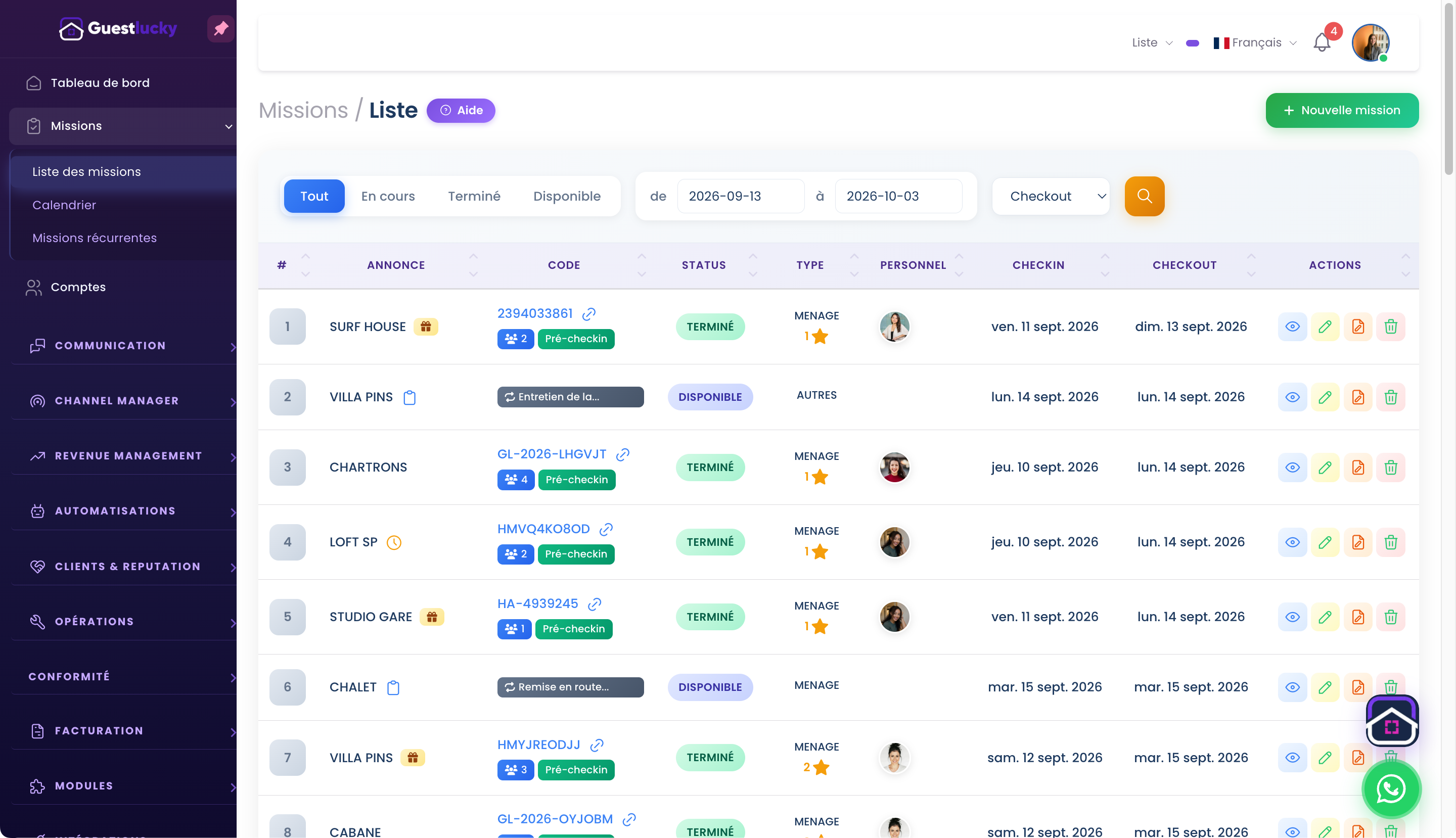
Calculate the real turnover window
For every reservation, compare checkout, next check-in, travel time and property size. Leave time for laundry, supplies, inspection and a late departure. Do not assume the same duration for every property.
Flag back-to-back bookings and changes immediately. The schedule should show who owns the handover when a reservation changes after a cleaner accepted the task.
Make assignments explicit
Give each task a property, date, access instructions, checklist and named assignee. Separate the cleaner's instructions from private guest data. Confirm acceptance and make it easy to request help.
A checklist can cover surfaces, linens, consumables, equipment, photos and lock-up. Tailor it to the actual property rather than copying a generic template.
Close the loop
Record completion time and issues with useful evidence. An unresolved leak, missing key or damaged item needs a responsible person and a decision before the next guest arrives.
Review late tasks and repeated defects. Use that information to improve staffing and buffer time, not merely to count completed cleans.
Keep booking and work aligned
Inspect how GuestLucky's cleaning tools relate to its calendar. Test the workflow against a changed booking before relying on it across your portfolio.
A clear exception path remains essential even when a task is generated automatically.
Continue with the GuestLucky guides or explore the features.